
Description
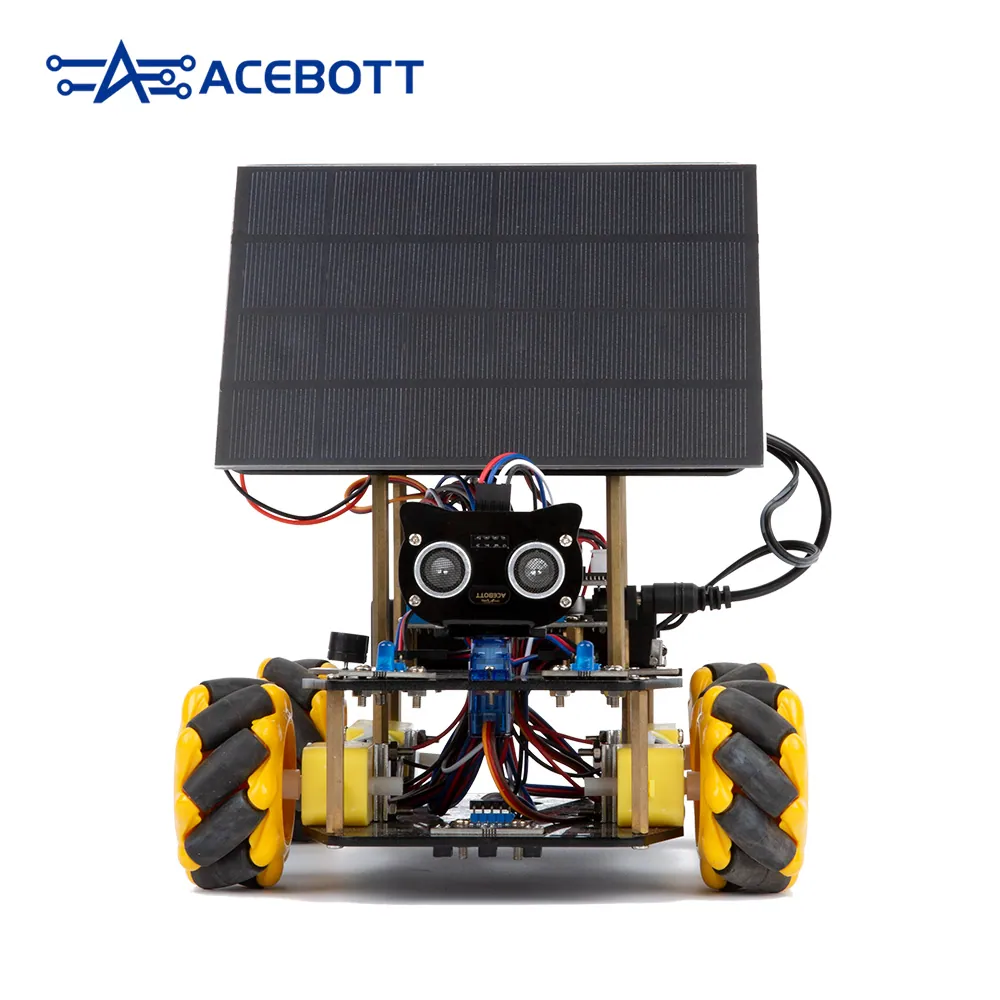
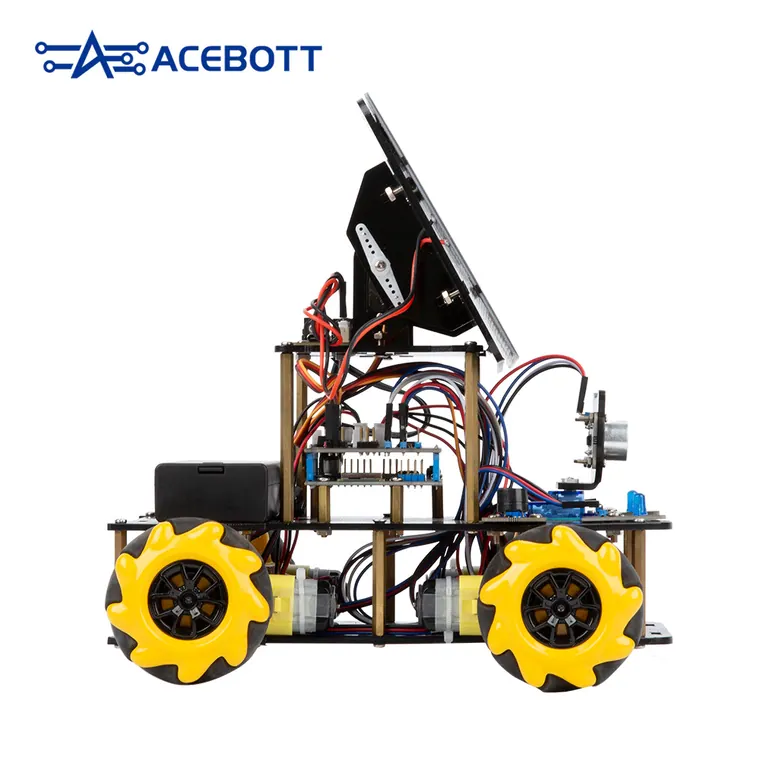
Bolting a solar panel to a robot turns an abstract topic into a measurable one. The panel angle is adjustable, so students can point it at the sun, log what comes back, and see for themselves how orientation and light level change the energy a vehicle collects.
Key features
- Solar charging the robot tops up its own battery from sunlight
- Adjustable panel angle measure how orientation changes the charge collected
- Web page and WiFi app control the same control modes as the base car
- Renewable energy projects energy, angle and efficiency made measurable
Learning resources
Programming: ACE Code, Arduino, Python
Tutorial languages: English, Chinese, Spanish
Works with
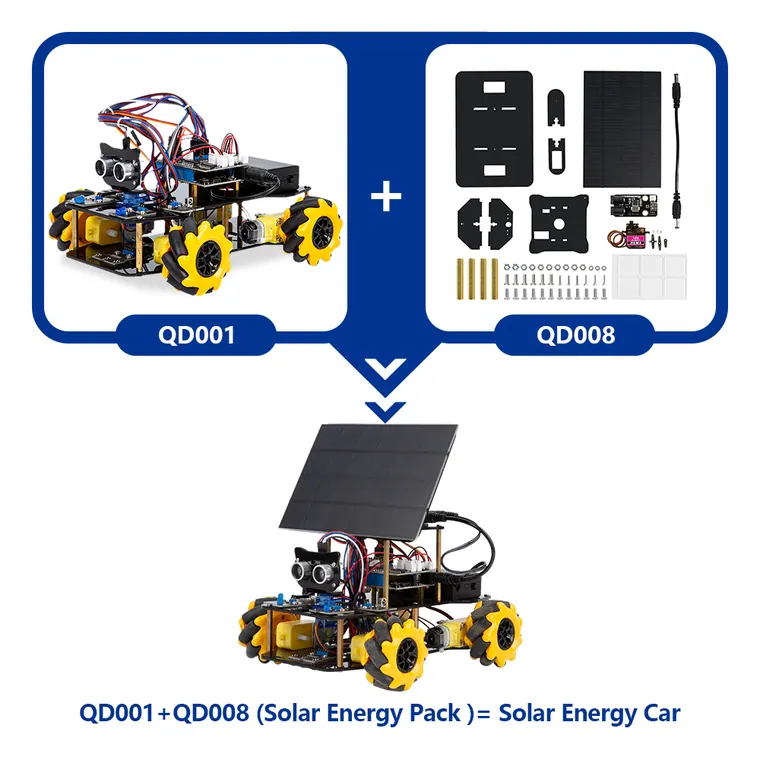
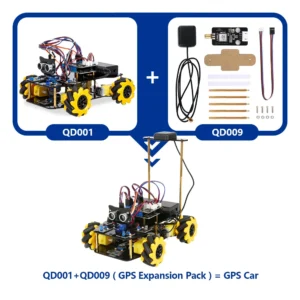
The ACEBOTT ESP32 Smart Car Starter Kit (QD001). The pack is an add-on and is not a standalone robot.
Please note
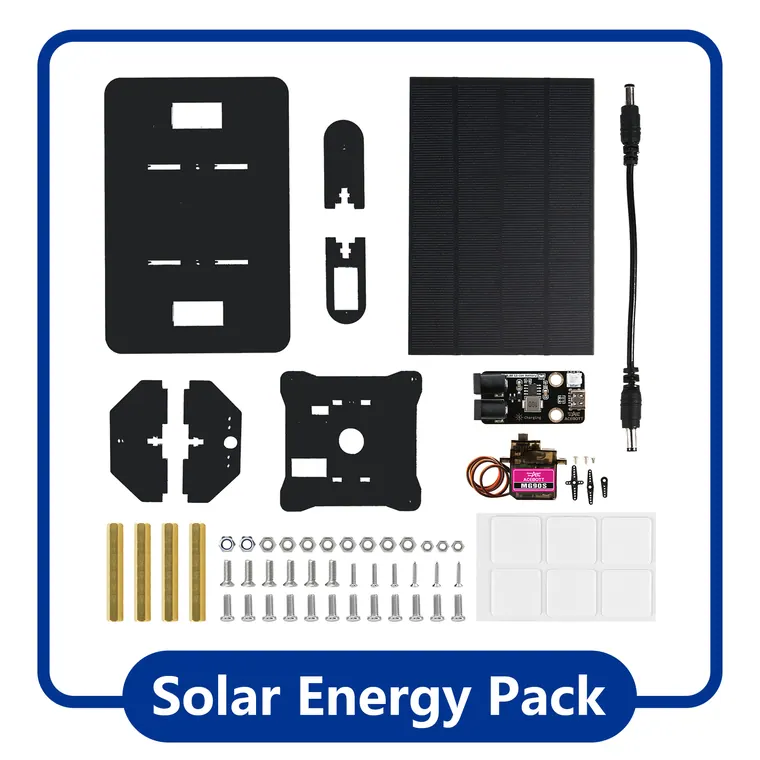
This is an expansion pack. It requires the ESP32 Smart Car Starter Kit (QD001), which is sold separately.
Specifications
| Specification | Detail |
|---|---|
| SKU | QD008 |
| Type | Expansion pack for QD001 |
| Power | Solar panel with battery charging |
| Adjustment | Panel angle is adjustable |
| Control | Web page and WiFi app |
| Programming | ACE Code, Arduino, Python |
| Tutorial languages | English, Chinese, Spanish |
| Shipping weight | 368 g |
| Base kit required | QD001 — sold separately |
Frequently Asked Questions
Does this work on its own?
No. It is an expansion pack for the ESP32 Smart Car Starter Kit (QD001) and needs that base kit to run.
Will the car run entirely on solar power?
Treat it as a charging pack rather than a replacement for the battery. The panel tops the battery up; run time still depends on sunlight, panel angle and how hard the motors are working — which is exactly what makes it a good experiment.
What can students measure with it?
How panel angle and light level change the charge collected, and how that translates into extra run time for the robot.
Reviews
There are no reviews yet.