
Description
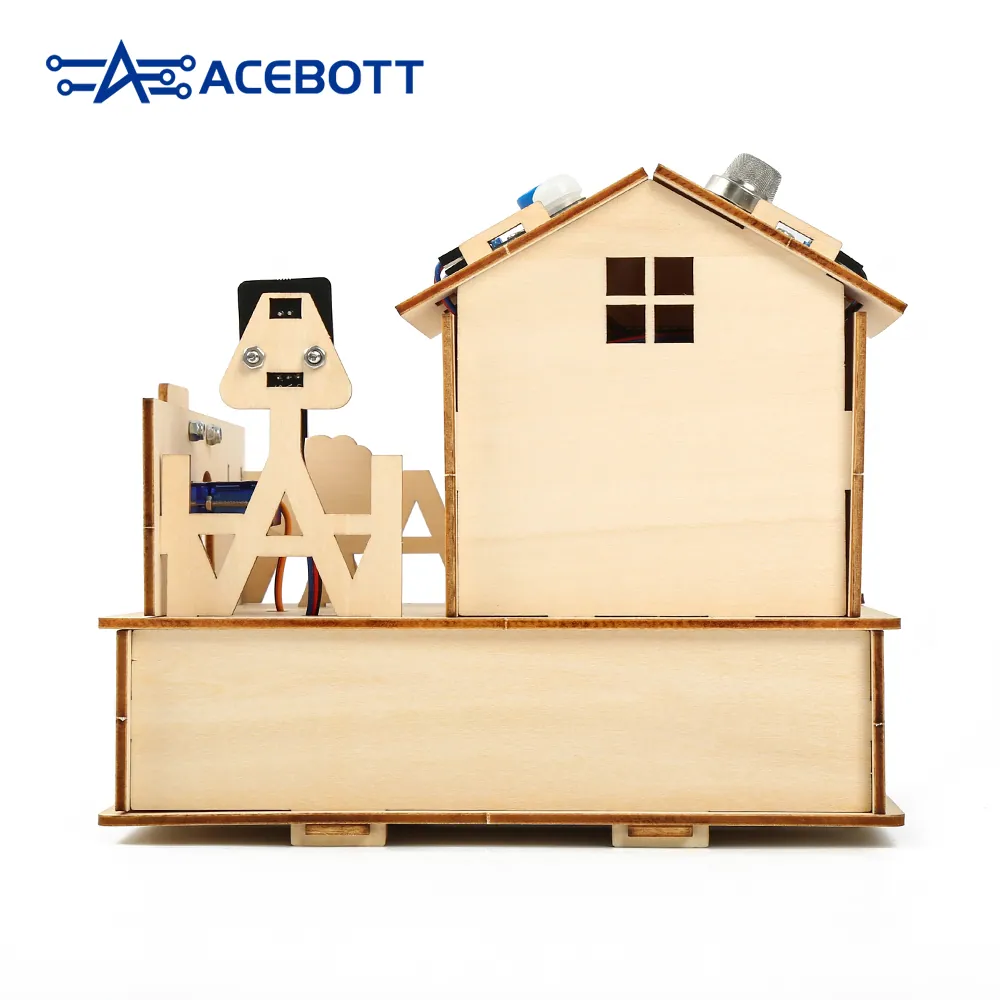
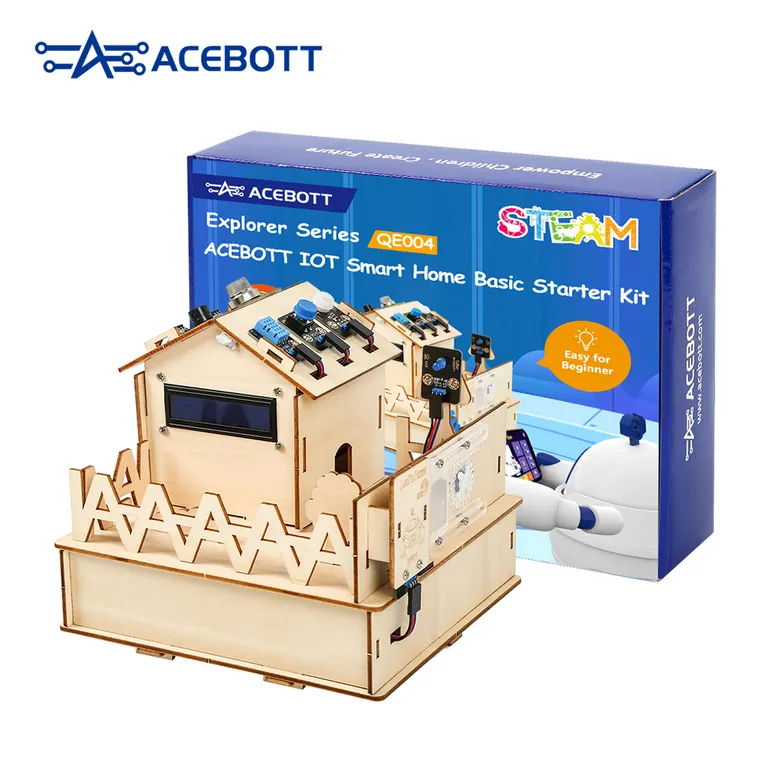
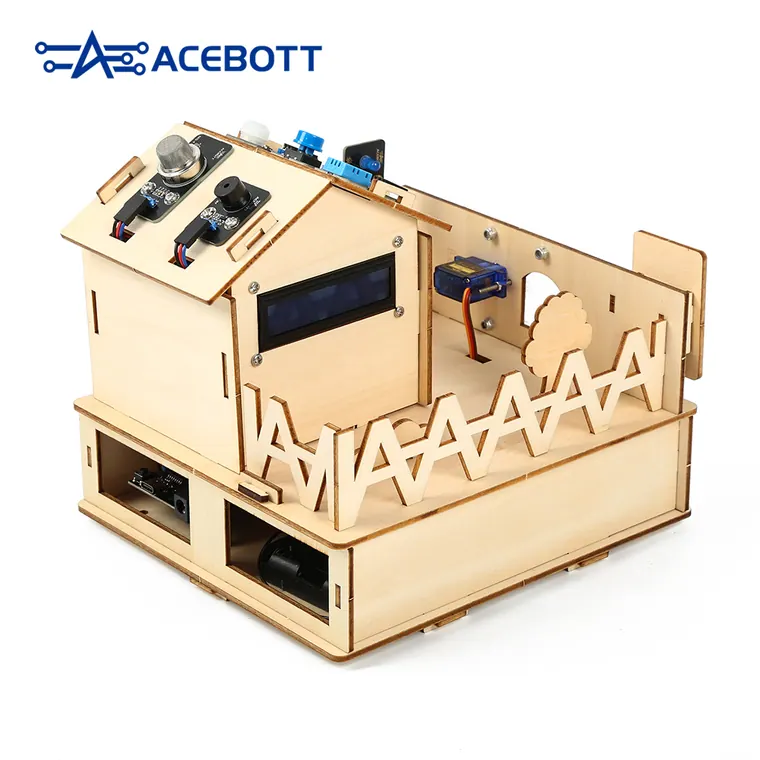
Every feature in this kit is one a real building has: a door that opens to a card, a light that notices someone in the corridor, an alarm that reacts to gas, a display that reports what the house knows. Students assemble the wooden shell, paint it, and write the code behind each one.
Key features
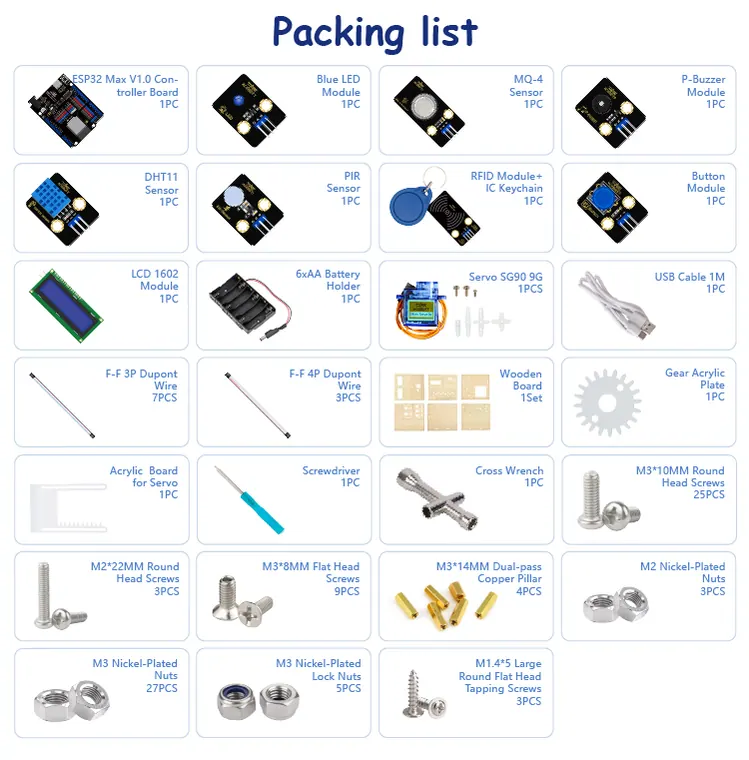
- RFID door entry the door unlocks to a registered card or fob
- Gas detection an alarm condition students define themselves
- PIR night lighting the light comes on when someone is actually there
- Buzzer with music and piano mode sound as an output, not just a beep
- LCD readout temperature, humidity, gas concentration and IP address
- Paintable house with ACEBOTT fence the build is an art exercise as well as an engineering one
Learning resources
Programming: Arduino
Tutorial languages: English, Chinese
Specifications
| Specification | Detail |
|---|---|
| SKU | QE004 |
| Series | Explorer Series |
| Controller | ESP32 (WiFi) |
| Structure | Laser-cut wooden house, paintable |
| Access control | RFID reader with card and fob |
| Sensing | Gas, PIR motion, temperature and humidity |
| Display | LCD — temperature, humidity, gas concentration, IP address |
| Programming | Arduino |
| Tutorial languages | English, Chinese |
Frequently Asked Questions
How is this different from the Smart Farm kit?
Same idea, different building. The farm is about growing things — watering, feeding, solar. The home is about living in a building — door access, gas safety, motion lighting.
Does it need soldering?
No. The modules connect with plug-in leads.
What does the RFID part teach?
How an access system actually works: reading a card ID, checking it against a list you control, and driving a physical lock from the result.


Reviews
There are no reviews yet.